
Why fish here
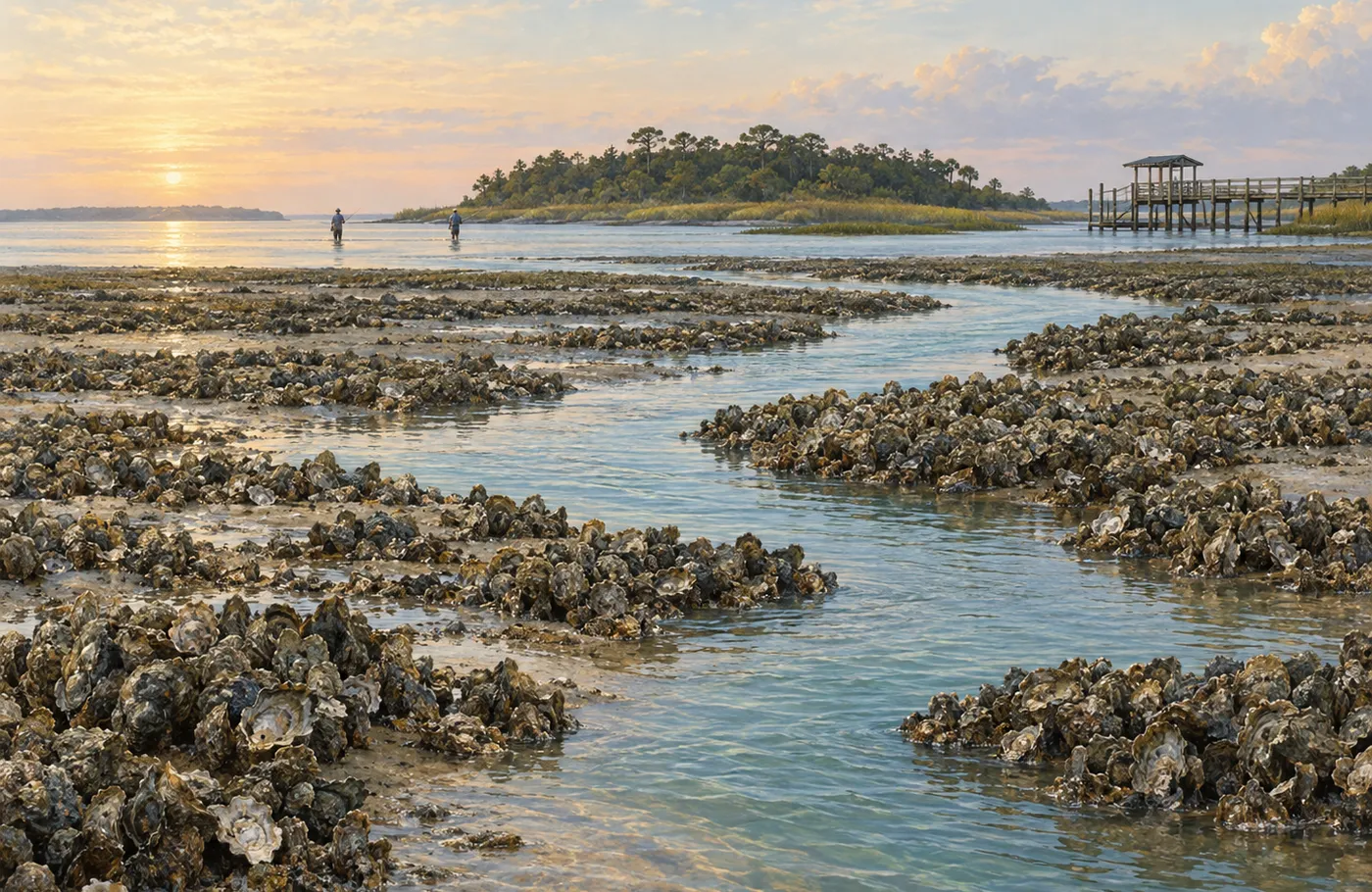
A fishery defined by tidal river, marsh creeks, inlet and nearshore atlantic.
A brackish-to-saltwater system that connects protected creek fishing with a powerful inlet and open Atlantic water.
The working habitat mix is marsh edges, docks, bridges, deep river channel, jetties and beach. That variety creates options, but it also makes a vague “fish everywhere” plan inefficient. Start by choosing one habitat type that fits the day’s wind, water movement and access.
Keep the first run short and learn a manageable section of water.
Use conditions to eliminate unsafe or unproductive-looking water before launching.
Name a sheltered alternative before the weather or access plan changes.
A practical first trip
Turn a large destination into a small, testable plan.
Use current breaks and structure, but stay clear of navigation channels and learn how wind opposes tide in exposed areas.
- 01Pick one primary target.
Choose from the representative species below, then verify that the season, rules and conditions support the plan.
- 02Choose one habitat zone.
Match that target to one part of the local habitat instead of trying to cover the full destination.
- 03Set a turnaround trigger.
Decide what wind, weather, water or crowding change will move you to the backup plan.
- 04Record what happened.
Note water conditions, access, useful habitat and fish response so the second trip starts smarter than the first.
Representative targets
Build the trip around one primary species.
- 01Redfish
- 02Spotted seatrout
- 03Flounder
- 04Sheepshead
- 05Black drum
- 06King mackerel
This is a planning list, not a live bite report. Presence, legal harvest and catchability are different questions.
Starter tackle and bait
Begin with a versatile setup, then specialize.
This is a general starting point for Florida inshore fishing, not a one-size-fits-all prescription. Large tarpon, offshore species, heavy structure and specialized techniques require different tackle.
- Rod and reel
- A 7 ft medium or medium-heavy spinning outfit with a saltwater-capable reel
- Main line
- 10 to 20 lb braid for general inshore fishing
- Leader
- 20 to 30 lb fluorocarbon as a baseline, adjusted for water clarity and target
- Starting lures
- Paddletails, weedless spoons, topwater plugs and shrimp imitations
Bait and lure starting points
- Live shrimp around structure and current
- Local baitfish where legal and available
- Soft-plastic paddletails over grass and edges
- Topwater plugs during low-light windows
Match hook style and size to the bait and target species. Use non-stainless circle hooks where required, and check current bait, gear and protected-species rules before fishing.
Seasonal pattern
Use the season to narrow the plan.
Fall is a major transition period, while winter structure fishing and warm-season nearshore options support different plans.
What do this week’s wind, water temperature and tide do to the habitat I intend to fish?
- Check the marine or local weather forecast, including wind direction and storm timing.
- Review the tide at the part of the system you plan to fish.
- Confirm legal access, launch hours and any closures.
- Recheck the official regulations for every species you may keep.
Access and hazards
Choose the launch for the plan, not the postcard.
Tidal range, current and commercial traffic deserve respect. Choose sheltered creeks when conditions are not appropriate for the river mouth.
Rules differ between freshwater, brackish and saltwater species. Confirm the license and harvest rules for your exact target.
Before leaving the ramp, identify the marked route, shallow or restricted areas, a safe weather fallback and the point when the trip should be shortened. Local knowledge is especially valuable when the water is unfamiliar or the route includes an exposed crossing.
Verify before fishing
Rules and conditions change.
The source trail below supports trip planning, but it does not replace a same-day rules and access check.
This guide has passed its scheduled review date. Its prior rules summary is hidden until a human verifies it again. Use the official links below before fishing.
Rules source trail reviewed September 10, 2026. Next scheduled review: December 10, 2026.
Regulations can change, including mid-season. Confirm current rules on the linked official page before you fish.